

Your Independent Advisors for Business & Tax in Georgia
Professional advisory and administrative guidance for your business formation, tax strategy, and relocation to Georgia. Transparent and independent.
Get StartedMeet CEO



Georgian Tax Partners supports German-speaking entrepreneurs with company formation and tax optimization in Georgia.
Under the leadership of Thorsten Töpfer, we offer you a clear, secure and practice-oriented implementation – from advisory services to the final structure.
Your advantages:
Simple Entry & Long Visa-Free Stay
Work 100% Location-Independent
Modern banks & simple administration
Legal Security & Stable Investment Climate
Fast & Uncomplicated Company Formation
The ideal solution for freelancers, agencies and online businesses.
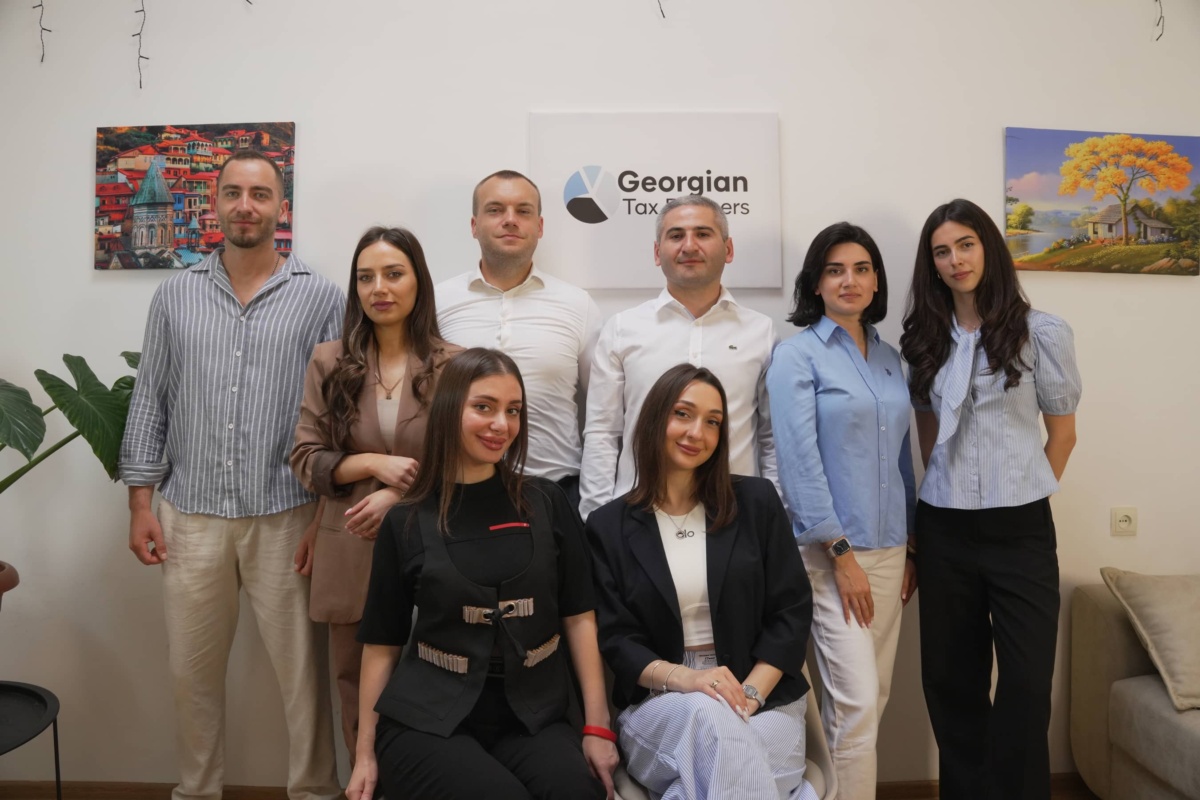
Meet the Team








Frequently asked questions about taxes and company formation in Georgia
Which documents are required for company formation?
The following documents are generally required to establish a company in Georgia:
Valid passport: For identification of the founder(s) or shareholder(s).
Power of Attorney (PoA): If the company is established remotely, a notarized and apostilled PoA is required.
Articles of Association / Company Charter: Document defining the company structure and management.
Legal address: A registered business address in Georgia is legally required.
Incorporation application: Official application for registration with the Georgian business registry.
Do I necessarily need my own office to establish a company in Georgia?
No, a physical office is not mandatory to start your business in Georgia. However, a legal address is legally required for the official registration of the company. Our team will gladly assist you in providing this address in order to fulfill the formal requirements for your company formation.
How is a Power of Attorney (PoA) created for the remote establishment of a Georgian company from abroad?
To legally issue a Power of Attorney (PoA) from abroad, a specific formal procedure must be followed. This ensures that the document is recognized in the destination country.
The process consists of three essential steps:
1. Notarization & Apostille: The PoA must be notarized in your current country of residence. In addition, the document must be apostilled (or legalized if the country is not part of the Hague Convention).
2. Sending the Original Document: Send us the notarized and apostilled original PoA by post or courier.
3. Local Finalization: Upon receipt of the document, we will handle the professional translation as well as the required local notarization to establish full legal validity on site.
How long does the registration process take?
Company registration in Georgia is generally very fast and efficient.
If all documents are complete and correctly submitted, the company formation can usually be completed within 1–2 business days.
In some cases, especially if additional checks or special requirements apply, the process may take up to 3–5 business days.
Which documents are required to open a private bank account?
While in the past a passport was often sufficient, Georgian banks tightened their requirements in 2026 in accordance with international standards.
Currently, the following documents are required for a successful account opening:
Valid passport: The primary identification document (national ID cards are generally not accepted).
Proof of Funds: Documents proving the origin of your wealth (e.g. salary slips from the last 6 months, tax assessments, sales contracts, or dividend reports).
Proof of connection to Georgia: As part of the enhanced KYC process (Know Your Customer), banks often require proof of a legitimate interest in the country, such as a local rental agreement, employment contract, or company registration.
Proof of income: Recent bank statements from your main bank account, ideally in English.
Note: Since each bank (e.g. Bank of Georgia, TBC) conducts its own compliance review, a preliminary review of the documents is recommended in order to avoid delays in the registration process.
Why do I need professional tax consulting in Georgia?
Professional consulting is essential due to the legal framework in Georgia. Although the main aspects of the Georgian Tax Code (e.g. tax rates and tax categories) have remained unchanged for more than 15 years, other parts of tax law are subject to frequent amendments, which requires precise compliance with current regulations.
The core points of our support:
Legal tax optimization: Our tax consulting services in Tbilisi help you legally reduce your tax burden – for example through the application of the Estonian tax model.
International agreements: We help you properly utilize double taxation treaties in order to avoid unnecessary tax burdens.
Professional bridge function: We bridge the gap between international standards and the specific Georgian legal framework.
Avoidance of penalties: Incorrect declarations may result in significant fines. We ensure the correct handling of your tax obligations.
What does the "Small Business Status" mean and what tax advantages does it offer?
The Small Business Status is one of the most attractive tax regimes for sole proprietors in Georgia. It was created to simplify administration and keep the tax burden for self-employed individuals to a minimum.
The most important tax advantages at a glance:
1% turnover tax: Individuals with this status pay only 1% tax on their gross turnover, provided that annual income does not exceed 500,000 GEL (approx. 170,000 EUR, as of 2026).
Increased tax rate in case of exceeding the threshold: If turnover exceeds 500,000 GEL, the exceeding amount is taxed at 3%. Only in case of continuous exceeding (in two consecutive years) is there a risk of losing the status.
Simplified accounting: The monthly tax declaration is straightforward and can be submitted digitally.
Important requirements and restrictions:
Not every activity qualifies for this advantageous regime. There is a list of permitted activities that can be carried out under this status.
Permitted: Including IT services, design, programming, and many other service-related activities.
Excluded: Activities such as consulting, gambling, medical services, or trading certain licensed goods.
Through our consulting services, we ensure that your intended activity meets the criteria and that you can legally benefit from the maximum tax advantages.
Can I operate as a "Small Business" (with 1% tax) while working remotely abroad?
Yes, Georgian tax law is particularly attractive for freelancers, IT specialists, and digital nomads who provide services to clients abroad. You can register in Georgia as an Individual Entrepreneur and apply for Small Business Status in order to benefit from the preferential 1% tax rate.
What you need to consider when working remotely for foreign clients:
Service relationship vs. employment: It is essential that your activity is classified as genuine freelancing (B2B). The contractual structure must not resemble dependent employment (false self-employment).
Permitted activities: The 1% status only applies to specific business activities. While software development, design, and marketing are generally accepted without issue, certain consulting services are explicitly excluded from this status.
Structuring and compliance: In order to prevent the Revenue Service from retroactively revoking the status, proper legal classification of your activity is necessary in advance. We support you in structuring your contracts and activity descriptions so that they comply with Georgian regulations in 2026.
With the correct preparation, you secure the benefits of low taxation and avoid being reclassified into the regular 20% income tax regime.
What advantages does the "Virtual Zone Person" status offer?
The Virtual Zone Person status is a special tax regime in Georgia specifically created to promote IT companies. It offers one of the most competitive tax models worldwide for software development businesses.
The main tax advantages at a glance:
0% Corporate Income Tax: IT companies providing software services to clients outside Georgia are fully exempt from corporate income tax.
VAT exemption: The provision of IT services to foreign clients is exempt from VAT.
0% export duties: No customs duties apply to the export of software products developed in the country.
Who can apply for this status?
The status is granted to legal entities (companies) that:
1. Operate in the field of information technology.
2. Create or develop software solutions in Georgia.
3. Primarily provide their services to international clients (outside Georgia).
Due to these significant tax benefits, the Virtual Zone is the ideal framework for IT exporters seeking to minimize operational costs and increase global competitiveness.
How can I obtain tax residency in Georgia?
Obtaining tax residency in Georgia offers attractive advantages, especially for international entrepreneurs. There are generally two ways to qualify as a tax resident:
A. The 183-Day Rule (Standard Procedure)
As a rule, you establish tax residency if you physically stay in Georgia for more than 183 days within a continuous 12-month period. After this period, you are considered fully taxable for the respective tax year.
B. The High Net Worth Individual (HNWI) Program
For wealthy private individuals, Georgia offers an exclusive special regime. This program allows tax residency to be obtained without meeting the 183-day minimum stay requirement.
Requirement: Proof of sufficient wealth or income as well as a connection to Georgia (e.g. through property ownership or local income).
Advantage: Maximum flexibility for globally active investors.
Our support service: We provide comprehensive consulting regarding the individual requirements for both options. In addition, we assist you with all administrative procedures.
Tax ID application: We support you in applying for your Georgian Tax ID at the Revenue Service in order to complete your tax registration in a legally compliant manner.
Who qualifies as a "High Net Worth Individual" (HNWI)?
To be recognized as a High Net Worth Individual (HNWI) in Georgia, a natural person must fulfill one of the following four combinations of conditions:
Option A (Assets & Status):
Proof of total assets exceeding 3 million GEL.
Of this, at least 500,000 USD (equivalent in GEL) directly invested/held in Georgia.
Possession of a Georgian residence permit or citizenship.
Option B (Income & Status):
Proof of annual income exceeding 200,000 GEL during the last 3 years.
Possession of at least 500,000 USD (equivalent) in Georgia.
Possession of a Georgian residence permit or citizenship.
Option C (Assets & Local Income):
Proof of total assets exceeding 3 million GEL.
Of this, at least 500,000 USD (equivalent) in Georgia.
Income from Georgian sources of at least 25,000 GEL during the last tax year.
Option D (Income & Local Income):
Proof of annual income exceeding 200,000 GEL during the last 3 years.
Possession of at least 500,000 USD (equivalent) in Georgia.
Income from Georgian sources of at least 25,000 GEL during the last tax year.
Can foreigners buy land in Georgia?
Foreign citizens may acquire non-agricultural land plots and real estate. Restrictions apply to the purchase of agricultural land, and we are happy to assist you in finding legally compliant solutions for your project.
How are corporations taxed in Georgia?
The core principle is the “Estonian Model”, meaning profit retention and the related deferral of taxation. Taxation does not occur on annual profits earned, but only at the time of actual profit distribution.
Tax rate: A corporate income tax of 20% generally applies.
Taxation point: The tax becomes due only when profits are distributed to shareholders (dividends).
Tax-free reinvestment: As long as profits remain within the company and are reinvested, the effective tax burden is 0%.
Advantages for companies:
Through this model, Georgian companies can finance their growth from gross profits, as no annual corporate tax reduces liquidity. This makes Georgia an attractive location for start-ups and expanding businesses.
Is there a property tax for individuals in Georgia?
Yes, individuals in Georgia are also subject to property tax. If your family’s annual income exceeds 40,000 GEL, you are required to pay property tax on real estate and vehicles located in Georgia.
The tax rate is progressive and depends on the market value of the property as well as the level of family income. The rate varies between 0.05% and 1%.
How is rental income from real estate taxed in Georgia?
For individuals renting residential property for residential purposes, the tax rate is only 5%. In other cases (e.g. commercial property), the rate is 20%.
The correct classification of residential status is essential in order to legally benefit from the 5% rate. Our team supports you with registration at the Revenue Service and with annual tax declarations.
How is cryptocurrency income taxed in Georgia?
In Georgia, profits from the sale of cryptocurrencies are exempt from income tax for individuals. Specific regulations apply to companies, and our consultants will gladly provide you with detailed information.
Can I receive foreign income tax-free in Georgia (territorial taxation principle)?
Yes, if you are a tax resident in Georgia, certain income from foreign sources (especially capital income) is exempt from income tax in Georgia.
Does Georgia have double taxation agreements?
Yes, Georgia has concluded agreements with 58 countries (including most EU member states, the United Kingdom, etc.). This allows you to avoid double taxation on the same income.
Ready to start in Georgia?
No obligation and free discussion
Direct channels
WhatsApp
+4917 191 46228
Telegram
+995 599 041 133
Address & hours
Office Address
Working Hours
Mo - Fr: 07:00 - 17:00
Sa - So: Closed
Get in Touch
We will get back to you